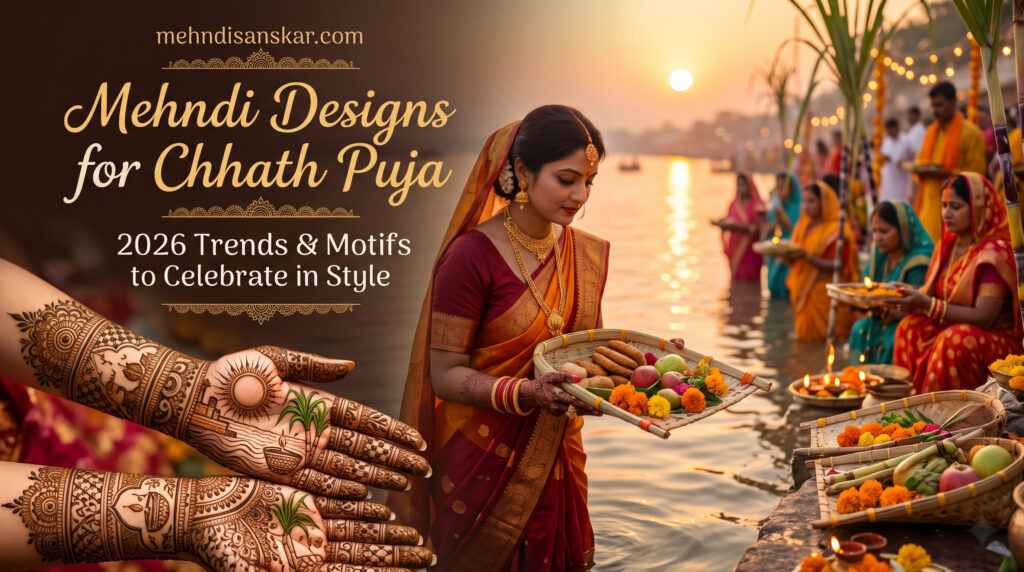
Mehndi Designs for Chhath Puja: 2026 Trends & Motifs
Discover auspicious mehndi designs for Chhath Puja featuring traditional motifs like the bamboo soop, Kalash, and Surya Dev. Get inspired by fresh 2026 trends, simple tutorials, and water-resistant henna tips for fasting devotees.
Are you preparing your festival look for the holy days of Chhath? As river ghats fill with devotional hymns, applying auspicious mehndi designs for Chhath Puja remains an integral part of festive adornment. Henna honors nature, purity, and spiritual devotion during this sacred period.
Whether you observe a strict waterless fast (nirjala vrat) or support family devotees at the riverbank, your hands can showcase sacred iconography. Here is your complete guide to 2026 Chhath festival henna trends, traditional motifs, and lasting care routines.
What Makes Mehndi Designs for Chhath Puja Unique in 2026?
Quick Answer: Auspicious mehndi designs for Chhath Puja center on reverence for Surya Dev and Chhathi Maiya. They incorporate motifs like the radiant sun, bamboo soop, sugarcane stalks, and the sacred clay elephant. For 2026, styles blend minimalist mandala palms for busy vratis with intricate Madhubani-inspired backhand patterns suited for water offerings during Sandhya and Usha Arghya.
Chhath Puja celebrates pure cosmic energy, truth, and ecological balance. The rituals honor Surya Dev (the Sun God) and Chhathi Maiya directly. Unlike standard party or wedding patterns, festival henna for this occasion emphasizes devotion over glamour.
In 2026, festive trends reflect a meaningful revival of regional folk art. Women are pairing centuries-old sacred shapes with clean, modern layout structures. From negative-space sunbursts to Madhubani border bands, these patterns convey deep spiritual respect.
Key Takeaways for 2026 Festival Patterns
- Sacred Geometry: Sunburst mandalas and circular solar patterns anchor palm designs.
- Folk Influence: Madhubani line art dominates backhands and wrists.
- Practical Density: Fasting devotees prioritize minimal, quick-drying motifs to conserve energy during festival chores.
Top Cultural Motifs to Include in Your Chhath Puja Henna
Authentic Chhath henna draws inspiration directly from the puja samagri (worship items) arranged in woven baskets. Including these elements transforms everyday henna into sacred artwork.
- Surya Dev (The Sun God): Central sun patterns with swirling solar rays represent energy, health, and vitality. Many women place a bold sun right in the center of the palm.
- The Bamboo Soop & Daura: Devotees present offerings in a woven bamboo tray known as a soop. Illustrating a petite soop laden with bananas and coconut adds instant festival character.
- Sugarcane Stalks (Ganna): Towering sugarcane stalks tied together form the holy canopy (koshiya) at home. Drawing crossed sugarcane stalks along fingers or wrists reflects agricultural abundance.
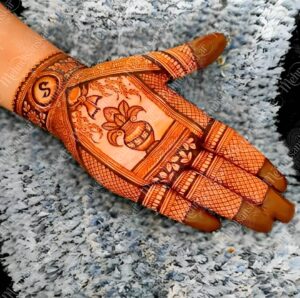
- Sacred Kalash and Coconut: A water jug crowned with mango leaves and a coconut represents divine prosperity. It sits beautifully as an anchor on the lower palm or inner wrist.
- The Lotus Bloom: The lotus remains sacred to Vedic rituals. Soft lotus petals carved with bold outlines symbolize purity emerging from earthly waters.
- The Clay Elephant (Mitti ka Hathi): In eastern folk tradition, the clay elephant holds deep spiritual importance. It serves as the primary vessel holder during the auspicious Kosi Bharai ritual. Drawing a stylized folk elephant on the palm adds historic folk character.
- Alta and Henna Pairing: Devotees pair dark henna with alta (red liquid dye or mahawar). Applying bright red alta along fingertips and foot borders is culturally mandatory for fasting women. The crimson edge frames the brown henna and creates an authentic ritual aesthetic.
Quick and Simple Chhath Mehndi Designs for Vratis
Fasting devotees (vratis) manage intense schedules. They prepare thekua prasad and maintain strict physical purity. Four-hour henna sessions are simply impractical for them. Quick, high-impact styles are the ideal choice.
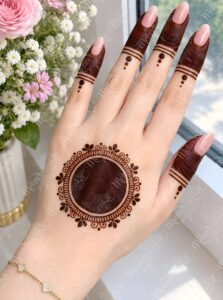
Minimalist Solar Mandala
A central circle surrounded by delicate flame-like rays takes under ten minutes to apply. Pair this solar center with leafy finger caps to create an elegant, balanced finish.
The Soop Accent Palm
Place a single framed motif of a festival soop on the palm, leaving open negative space around it. Frame your wrist with a slim double-line bracelet cuff inspired by regional folk weaves.
Comparison: Henna Styles for Chhath Puja 2026
| Style Type | Application Time | Drying Duration | Best Suited For | Key Aesthetic Element |
|---|---|---|---|---|
| Solar Mandala | 10–15 mins | 20 mins | Fasting Vratis | Central Sunburst with Ray Flares |
| Madhubani Folk | 30–45 mins | 45 mins | Cultural Enthusiasts | Double-lined borders, Fish & Lotus |
| Full-Hand Traditional | 60–90 mins | 60 mins | Newly Married Devotees | Jaal work, Elaborate Koshi Scenes |
| Minimal Finger Henna | 5–10 mins | 15 mins | Busy Family Helpers | Geometric fingertips, wrist bands |
Love celebrating autumn occasions with timeless styles? Exploring our guide to festive Raksha Bandhan mehndi patterns offers great inspiration for delicate wristbands and floral chains.
Intricate Traditional Full-Hand and Back-Hand Designs
If this is your first Chhath after marriage, local customs encourage elaborate adornment. Newlywed women frequently choose full-forearm compositions to match vibrant red and yellow Chhath sarees.
Madhubani-Inspired Forearm Bands
Madhubani art originated in the Mithila region, making it an authentic fit for Chhath Puja. Use crisp double outlines filled with thin diagonal hatches. Craft panels that show peacocks, lotus ponds, and radiant sun rays.
Back-Hand Jaal with Solar Centerpieces
Your back hands stay prominent while raising the soop toward the sky at dawn. Craft a geometric lattice (jaal) across the back of your hand. Leave open circular medallions to house detailed sun motifs. This makes your prayer posture striking during sacred offerings.
As the calendar shifts toward winter celebrations, these compositions align smoothly with styles featured in our trend report on peak winter wedding and festival mehndi styles.
Step-by-Step Tutorial: Drawing a Sun & Arghya Motif at Home
Creating a devotional motif requires steady cone pressure rather than complex illustration skills. Follow this simple tutorial to sketch an auspicious festival motif at home.
- Inner Core: Draw a small, crisp circle in the palm center.
- Solar Aura: Ring the circle with delicate teardrop dots.
- Radiant Beams: Alternate long and short triangular rays outward.
- The Offerings: Add two crossed diagonal lines underneath for sugarcane.
- Final Accents: Shade interior spaces using light henna strokes.
Application Instructions
- Sanitize the Skin: Wash your hands with plain soap and water to strip natural oils. Avoid applying hand creams or body lotions beforehand.
- Sketch the Anchor: Place a coin in the center of your palm and trace lightly around it using the tip of your henna cone.
- Add Radial Balance: Pipe four cardinal rays first (top, bottom, left, right). Fill the gaps between them with secondary rays to ensure balanced spacing.
- Ground the Base: At the bottom edge of your sun, draw a small semi-oval to represent the sacred arghya offering vessel. Fill it with tiny dots signifying rice and seasonal fruits.
Pro Tips for Deep, Long-Lasting Henna Color During Water Rituals
Chhath Puja requires devotees to stand waist-deep in river water for extended periods. Submerging your hands can fade fresh stains if your henna has not oxidized properly. Following the four-day festival timeline ensures durable, rich color.
Understanding the 4-Day Chhath Timeline for Henna Care
- Day 1: Nahay-Khay (Purification): Devotees clean the home, bathe ritually, and eat a single pure meal. Keep hands bare and clean on this day.
- Day 2: Kharna (Preparation & Application): Vratis observe a strict fast ending with evening kheer-roti prasad. Apply your henna on Kharna night. This timing guarantees an uninterrupted 24-hour oxidation window before major water immersion begins.
- Day 3: Sandhya Arghya (Sunset Offerings): Devotees stand in river water to offer prayers to the setting sun. Because your henna cured overnight, the stain resists water damage.
- Day 4: Usha Arghya and Paran (Dawn Offerings): Devotees offer morning prayers to the rising sun and conclude their fast.
Essential Application Rules
- Avoid Water When Removing Crust: Scrape the dried crust off using a blunt edge or your fingernails. Never wash the paste away with tap water, as early water contact arrests oxidation.
- Use Cloves and Heat: Heat several whole cloves on a dry skillet. Hold your hands over the rising aromatic smoke (laung ka sek) to deepen the stain naturally.
- Create a Natural Oil Barrier: Before entering the river for arghya, coat your hands thoroughly with mustard oil or pure ghee. This layer repels cold water and shields your design while you hold the offering basket.
Ensure you obtain natural henna from reputable sources. You can also verify regional folk art patterns through heritage archives like the IGNCA (Indira Gandhi National Centre for the Arts) to appreciate the traditional crafts of eastern India.
Post-Immersion Henna Aftercare
Once Usha Arghya concludes on Day 4, pat your hands dry immediately with a soft cotton cloth. Do not scrub with chemical detergents. Massage a few drops of warm mustard oil into your palms to restore moisture, soothe skin chilled by the river, and maintain your festive color.
Frequently Asked Questions
Which motifs are most auspicious for Chhath Puja mehndi designs?
The most sacred motifs for Chhath Puja include Surya Dev (the Sun God), traditional bamboo soop baskets, sugarcane stalks, kalash with coconut, and lotus flowers. These symbols directly represent nature, agriculture, and divine gratitude.
When should vratis apply mehndi during the four days of Chhath Puja?
The best time to apply mehndi is during the evening of Kharna (the second day). This gives the henna 24 to 36 hours to oxidize into a rich, dark stain before the hands are submerged during Sandhya Arghya offerings.
How can I protect my festival mehndi stain from fading in river water?
To protect your henna from long water exposure at the ghats, scrape the paste off dry without water and warm your palms over clove smoke. Apply a thick layer of mustard oil or petroleum balm right before entering the water to create a moisture-resistant barrier.