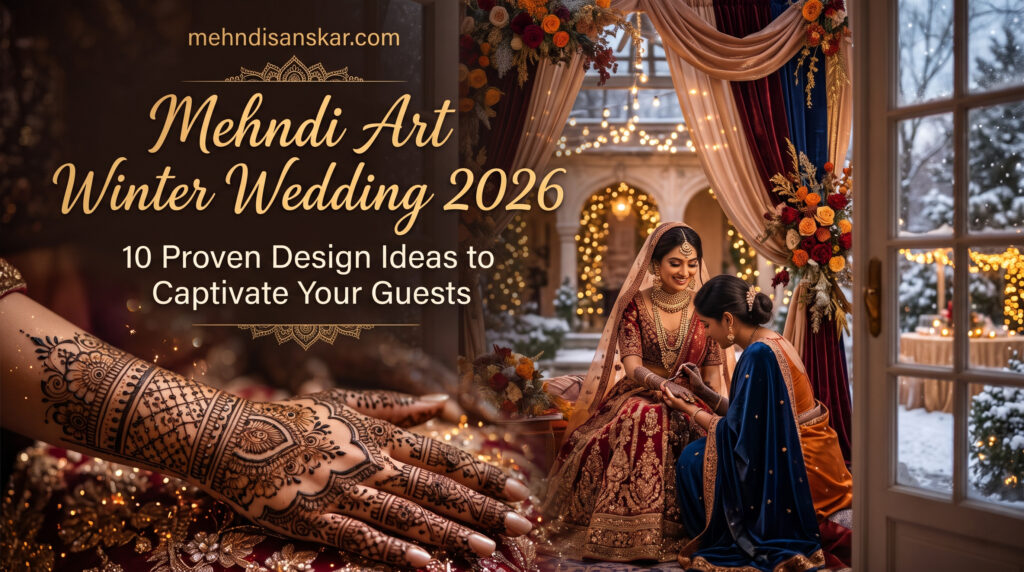
Mehndi Art Winter Wedding 2026: 10 Proven Design Ideas to Captivate Your Guests slug
Discover how the ending months bring dramatic, Mehndi Art Winter Wedding 2026 high-contrast henna artistry to peak winter weddings.
Explore 10 stunning mehndi design patterns dominating bridal aisles in 2026.
Key Takeaways:
- Winter bridal celebrations spotlight negative-space cutwork, architectural arches, and Pichwai motifs built to balance heavy fabrics.
- Micro-jaal grids and glove-inspired cuffs offer lightweight comfort without sacrificing visual impact.
- Deep burgundy stains pair seamlessly with seasonal jewel tones like emerald, wine, and navy.
Table of Contents
- Winter Henna Chemistry and Cold-Weather Techniques
- 10 Trending Mehndi Design Styles for the Winter Bridal Season
- Style Comparison: Winter Bridal Henna Guide
- Aesthetic Pairing: Winter Fabrics and Henna Patterns
- Frequently Asked Questions
Late-year weddings create an instant demand for striking henna art. Cooler air and layered silks call for mehndi styles that stand out with crisp clarity. Whether you prepare for your pheras or attend seasonal sangeets, choosing an expressive pattern anchors your entire celebration.
Winter Henna Chemistry and Cold-Weather Techniques
Quick Answer: The winter bridal season demands high-contrast henna art with bold structural definition. Leading artists favor architectural jharokha cutwork, narrative portrait frames, negative-space lace cuffs, and geometric mandalas. These patterns maximize color depth through careful heat management, creating a regal look against dense velvet and silk attire.
Winter temperatures directly affect lawsone oxidation kinetics. Lawsone is the natural dye molecule in henna. It binds to keratin in the skin through an oxygen-dependent process. Cold room temperatures slow this chemical reaction, which often results in lighter stains.
To counteract chilly air, experienced artists rely on focused thermal retention techniques. Brides sit over gently heated clove smoke, known as laung dhuni, to warm their palms. Electric heating pads and warm air wraps also encourage dye migration deep into the epidermis.
After paste removal, moisture management becomes essential. Water stops oxidation by rapidly cooling skin tissue. Brides should coat their hands in rich botanical balms or sesame oil sealants. Avoiding water for twenty-four hours guarantees a dark, uniform mahogany finish.
Learn more about traditional roots through this Encyclopedic Art Reference.
10 Trending Mehndi Design Styles for the Winter Bridal Season
Recent bridal fashion runways and luxury artist collectives highlight a move toward structured contrast. The following ten styles lead the current bridal season.
1. Royal Jharokha Architecture
Architectural jharokha patterns replicate heritage palace windows, cusped arches, and stone pillars. Winter celebrations favor these framed silhouettes because they ground the forearm with majestic symmetry. Fine diagonal hatching inside each arch provides striking contrast against bold exterior borders.
2. Negative Space Silhouette Lotus Bands
Reverse-fill designs leave bare skin unadorned instead of crowding every inch with paste. Lotus buds and sprawling vines emerge from solid blocks of dark color. The resulting negative space glows warmly under soft evening banquet lighting.
3. Fine-Line Micro Mandala Grids
Micro mandalas center on concentric circular precision across the palm. Paired with symmetrical wrist cuff grids, this style provides an immaculate, contemporary aesthetic. Brides who prefer refined detailing over dense paste choose this look for balanced elegance.
Discover curated variations in our collection of minimalist mehndi.
4. Pichwai Heritage and Sacred Flora
Pichwai henna takes inspiration from traditional Rajasthani temple tapestries. The style integrates blooming lotus blossoms, sacred cows, and ornate peacocks. Brides select this motif during late-year festivities to match antique gold zardozi embroidery.
5. Minimalist Glove Cuffs and Lace Mesh
This pattern mirrors delicate lace evening gloves that rise across the wrists. Gossamer netting, suspended pearl drops, and scalloped trim define the layout. Modern brides prefer this layout for rapid application during busy cocktail parties.
6. Symmetrical Chevron and Aztec Jaal
Geometric chevrons provide sharp angles that cut through softer botanical elements. Parallel lines combine with uniform grid work across the fingers. This structure adds a crisp, modern feel to traditional bridal lehengas.
7. Narrative Portraiture and Varmala Vignettes
Hyper-detailed portraits capturing key ceremonial rituals remain a top runway trend. Central medallions showcase the couple exchanging garlands or greeting each other. Surrounding areas feature subtle micro-motifs to keep the focal portraits sharp.
Explore our latest portfolio of bridal mehndi designs for more narrative concepts.
8. Flowing Gulf-Arabic Floral Vines
Unlike symmetrical Indian styles, Gulf-Arabic designs flow diagonally across the hand. Bold leaves, open negative spaces, and layered shaded roses define the technique. The layout creates an elongated, graceful appearance along the fingers and wrists.
Browse trending techniques in arabic henna art.
9. Moroccan Geometric Ribbons
North African geometry brings distinct visual energy to contemporary celebrations. Straight diagonal paths, diamond checks, and triangular borders frame the arms like tailored cuffs. This layout suits brides who select sleek Indo-western gowns or cape lehengas.
10. Shaded Botanical Leaves and Rose Ensembles
Soft internal shading pairs with crisp outer outlines in this romantic trend. Graduated petal shading fades into delicate fern leaves. The organic layout feels fresh and pairs beautifully with outdoor winter garden settings.
Style Comparison: Winter Bridal Henna Guide
Use this comparative guide to select the right pattern density and placement for your events:
| Design Style | Dominant Motifs | Visual Density | Best Wedding Function |
|---|---|---|---|
| Royal Jharokha | Arches, pillars, miniature chandeliers | High | Main Wedding Ceremony |
| Negative Space Lotus | Reverse-fill cutouts, bold borders | Medium-High | Sangeet & Reception |
| Micro Mandala Grid | Concentric rings, pearl chain borders | Medium | Engagement & Mehendi |
| Pichwai Art | Water lilies, peacocks, sacred cows | High | Traditional Wedding |
| Lace Glove Cuffs | Geometric netting, scalloped edges | Low-Medium | Cocktail Party |
| Symmetrical Chevron | Angular zigzags, linear lines | Medium | Sangeet Night |
| Narrative Portraiture | Couple faces, varmala rituals | High | Main Wedding Ceremony |
| Gulf-Arabic Vines | Flowing trails, shaded petals | Medium | Welcome Brunch |
| Moroccan Ribbons | Triangles, diamonds, chevron bars | Low-Medium | Welcome Dinner |
| Shaded Botanical | Graded rose petals, fern leaves | Medium | Garden Mehendi |
Aesthetic Pairing: Winter Fabrics and Henna Patterns
Heavy velvet, raw silk, and brocade garments balance best with bold, high-contrast henna. Delicate linework often fades visually next to heavy metallic embroidery. When your outfit features dense zardozi or dabka work, choose patterns with wide negative bands.
Lighter fabrics like tissue organza pair gracefully with fine-line lace and micro mandalas. Plan your application schedule carefully. Book your henna session 48 hours before the main ceremony. This timeline allows lawsone oxidation to peak just as you step into your bridal attire.
Frequently Asked Questions
Why does henna take longer to darken in winter?
Cold weather slows blood circulation in the hands and feet. This drops surface skin temperature and slows down the chemical oxidation of lawsone. Keeping hands warm ensures the rich mahogany color develops on schedule.
How do I protect my fresh bridal henna from winter water exposure?
Never scrape paste away using water. Instead, remove dry paste using coconut oil or mustard oil. Apply an all-natural beeswax balm over the design before bathing to block moisture effectively.
What is the purpose of clove smoke during winter henna application?
Gently heating whole cloves in a dry pan creates aromatic medicinal smoke called laung dhuni. Placing your palms over this rising warmth generates heat. This thermal stimulus accelerates dye bonding without causing sweat, which could smudge delicate lines.
Which mehndi design style best matches heavy winter bridal velvet?
Negative space jharokha patterns and bold architectural cutouts complement thick winter velvet lehengas best. Bold contours create distinct separation, ensuring intricate henna does not get visually lost against dense embroidery.
Why is negative space henna popular in winter wedding celebrations?
Negative space henna leaves bare skin uncolored within bold stained borders. This contrast creates a striking graphic look under ambient evening lighting and deepens visual stain intensity during dry winter weather.
How do Pichwai and lotus motifs fit modern winter bridal looks?
Pichwai motifs use shaded lotus blooms, cows, and archways to add royal heritage without dense clutter. They provide breathing room across the palms, delivering a contemporary royal aesthetic.
Can minimalist mehndi patterns work for traditional winter brides?
Yes. Minimalist lace glove cuffs, finger jewelry jaal, and geometric wrist bands offer clean, high-impact elegance for modern winter brides seeking comfort and reduced application time.